
Felix Mbata, Lagos state
 The leadership of Ndi Igbo in the diaspora has formally announced a historic change in nomenclature, replacing the long-standing title Eze Ndigbo Nauzoije with Onyendu Ndigbo, in a move aimed at restoring dignity, order, and cultural authenticity within the institution.
The decision, which was unveiled at a well-attended press conference in Lagos, followed years of controversy, disputes, and failed reconciliation efforts surrounding the use of the Eze Ndigbo title outside Igboland.
Tracing the origins of the dispute, the leaders recalled that as far back as 2008, the then Chairman of the Southeast Council of Traditional Rulers, Eze C. I. Ilomuanya, had publicly proposed a change in the nomenclature of Eze Ndigbo. The move, however, was made without consultation with the Association of Eze Ndigbo Nauzoije and the Diaspora, then led by Eze H. N. Ohazulike (OON).
In response, diaspora Igbo leaders emphasized that their body was a structured and culturally guided institution comprising respected individuals who, despite holding traditional titles in their home communities, refrained from assuming royal styles such as HRH and HRM in diaspora settings, in line with their constitution and Igbo customs.
Subsequent efforts to resolve the matter, including a 2009 meeting convened in Owerri by Ilomuanya, failed to produce lasting outcomes, as agreed resolutions were not implemented.
Further intervention came in 2010 when the then President-General of Ohanaeze Ndigbo Worldwide, Ambassador Ralph Uwechue (OFR), convened a marathon meeting at his residence, African House, in Ugwashi-Ukwu. After over seven hours of deliberation, participants agreed on adopting an alternative nomenclature, Ndi-Isi Ndigbo, a decision endorsed by Ohanaeze leadership and made public.
However, the resolution was short-lived, as it was rejected shortly afterward, reigniting tensions.
In 2013, another attempt at resolution was made when the Imo State Government hosted a three-day stakeholders’ meeting in Owerri. At the end of deliberations, participants agreed to adopt Ochi Igbo as a replacement for Eze Ndigbo. Yet again, the agreement collapsed following public rejection of the outcome, prolonging the leadership crisis.
Despite these setbacks, the association maintained internal discipline, particularly within its southern zone, where adherence to constitutional provisions helped preserve some level of order. The constitution clearly restricted the use of exalted royal titles to duly recognized traditional rulers in their respective communities.
However, the situation took a dramatic turn from 2018, particularly in Lagos State, where the leadership structure of the Council of Eze Ndigbo reportedly became compromised and infiltrated by external interests. This development, leaders said, led to the commercialization and indiscriminate conferment of the Eze Ndigbo title.
According to them, titles were allegedly sold for as low as one hundred thousand naira, with little or no regard for due process, cultural orientation, or ethical standards. This, they noted, resulted in widespread abuse, with individuals lacking credibility parading themselves with grandiose royal titles such as “His Imperial Majesty.”
The development, they stressed, not only eroded the integrity of the institution but also brought embarrassment to genuine Igbo leaders in the diaspora.
The crisis reached a tipping point in 2025 when the Southeast Council of Traditional Rulers formally placed a ban on the use of Eze Ndigbo Nauzoije. Faced with mounting pressure and the need to preserve institutional credibility, the diaspora leadership resolved to comply.
Announcing the new direction, the leaders said the adoption of Onyendu Ndigbo marks a new beginning anchored on unity, respect for tradition, and alignment with recognized authorities, including the Southeast Governors’ Forum, the Southeast Council of Traditional Rulers, and Ohanaeze Ndigbo Worldwide.
“This decision was not taken lightly,” the leaders stated. “It is the culmination of years of engagement, reflection, and commitment to preserving the dignity of Igbo leadership in the diaspora.”
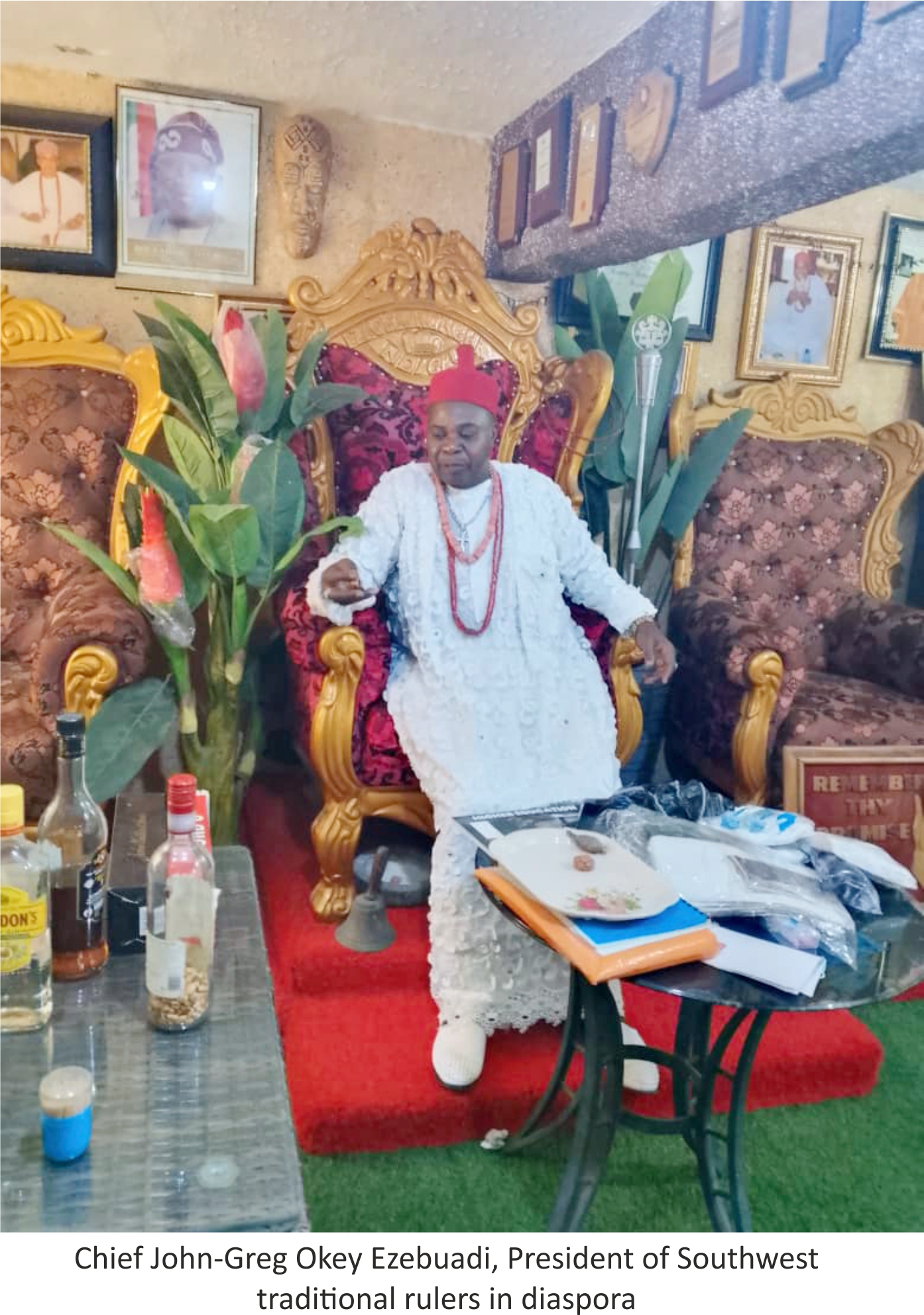
The press conference attracted prominent Igbo leaders from Lagos and Ogun states, including Professor Innocent Friday Okunamiri, Onyendu Ndi-Igbo of Ifo Local Government Area; Igwe Eucharia, Woman Leader of Ohanaeze Ndi-Igbo, Iba Palace Estate; Chief Sir Clifford I. Umeh; Chief Bernard Njoku; and Chief John Greg, among others.
They collectively expressed optimism that the new nomenclature would end years of controversy, strengthen unity among Ndi Igbo in the diaspora, and restore respect for cultural values and traditional institutions.