


RAYMOND TEDUNJAYE, Lagos.
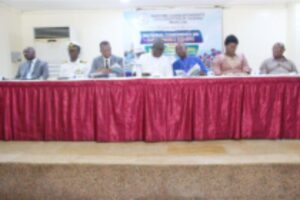 The call for a more sustainable and resilient fisheries sector took centre stage as the Maritime Correspondents’ Organisation of Nigeria (MARCON) held its maiden National Conference on Sustainable Fishing on Wednesday, September 30, 2026, at Rockview Hotel, Apapa, Lagos.
With the theme, “Sustainable Fishing in Nigeria: Pathway to Growth, Food Security and Coastal Livelihoods,” the conference brought together stakeholders from across the maritime and fisheries sectors to examine the challenges confronting Nigeria’s fishing industry and explore practical pathways towards sustainability. Papers presented at the gathering focused on critical issues ranging from responsible fishing practices and resource management to food security, economic growth and the protection of livelihoods in coastal communities.
The discussions underscored a common message: achieving sustainable fishing in Nigeria requires coordinated action, effective regulation, stakeholder participation and long-term commitment to protecting the nation’s aquatic resources. The papers presented at the conference provided insights into these issues and offered perspectives on how Nigeria can build a fisheries sector capable of supporting livelihoods and food production while safeguarding its resources for future generations.
𝐀𝐪𝐮𝐚𝐭𝐢𝐜 𝐑𝐞𝐬𝐨𝐮𝐫𝐜𝐞𝐬: 𝐌𝐀𝐑𝐂𝐎𝐍 𝐌𝐨𝐯𝐞𝐬 𝐭𝐨 𝐏𝐮𝐭 𝐅𝐢𝐬𝐡𝐞𝐫𝐢𝐞𝐬 𝐚𝐭 𝐂𝐞𝐧𝐭𝐫𝐞 𝐨𝐟 𝐍𝐢𝐠𝐞𝐫𝐢𝐚’𝐬 𝐄𝐜𝐨𝐧𝐨𝐦𝐢𝐜 𝐃𝐢𝐯𝐞𝐫𝐬𝐢𝐟𝐢𝐜𝐚𝐭𝐢𝐨𝐧
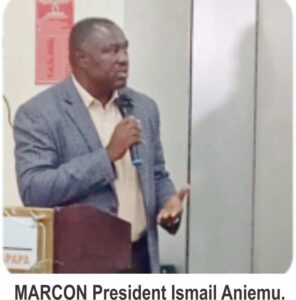 Setting the tone for the conference in his welcome address, president of MARCON Ismail Aniemu stressed the importance of Nigeria’s fisheries and aquatic resources to food security, employment and national economic development.
Aniemu said the term fishing should not be restricted to finfish alone, noting that the country’s aquatic resources also encompass products such as octopus, crabs, shrimps and crayfish, as well as the wider value chain associated with the sector.
According to him, Nigeria’s independence on oil and gas has contributed to inadequate attention to fisheries and other sectors capable of contributing significantly to economic growth.
He said the country’s aquatic resources should be treated as an integral part of the national economy rather than viewed solely as a source of food.
“Fish itself is part of our national economy. We can’t be discussing food economy and keeping fish in isolation,” Aniemu said.
He explained that the conference would provide a platform to examine the entire fisheries value chain, including production, quality, participation, investment and sustainability.
Aniemu said the industry must ensure that fishing activities do not undermine the health of Nigeria’s marine ecosystem, stressing the need for sustainable management of aquatic resources.
The MARCON president identified marine pollution, illegal, unreported and unregulated fishing, and inadequate indigenous participation as some of the critical issues requiring attention, saying “We need to maintain a very healthy marine life if we must have sustainable fishing in Nigeria”.
In addition , Aniemu also called for greater indigenous participation and investment in the fisheries sector, noting that discussions around investment and economic opportunities in Nigeria often focus disproportionately on other sectors.
He said the annual conference would continue to bring stakeholders together to examine challenges and opportunities across the fisheries value chain and promote greater awareness of the sector’s contribution to Nigeria’s economy.
Aniemu expressed optimism that sustained attention to fisheries and other aquatic resources could help diversify Nigeria’s economy, strengthen food security and create opportunities for economic development.
He announced that the next edition of the National Conference on Sustainable Fishing would hold in September 2027, making the event a permanent item on MARCON’s annual calendar.
𝐍𝐏𝐀 𝐂𝐚𝐥𝐥𝐬 𝐟𝐨𝐫 𝐃𝐞𝐝𝐢𝐜𝐚𝐭𝐞𝐝 𝐅𝐢𝐬𝐡𝐢𝐧𝐠 𝐏𝐨𝐫𝐭𝐬 𝐭𝐨 𝐔𝐧𝐥𝐨𝐜𝐤 𝐍𝐢𝐠𝐞𝐫𝐢𝐚’𝐬 𝐅𝐢𝐬𝐡 𝐄𝐜𝐨𝐧𝐨𝐦𝐲
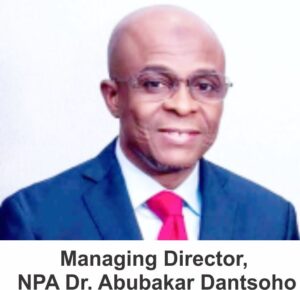 In its presentation at the occasion, the Nigerian Ports Authority (NPA) called for the development of dedicated fishing ports and specialised fish terminals as part of efforts to unlock Nigeria’s fisheries potential and strengthen the country’s blue economy.
Managing Director of the NPA, Abubakar Dantsoho, his paper delivered on his behalf by Adegbite Adewunmi, said the development of a viable fish economy required investment in core fishing port infrastructure, efficient handling systems and logistics facilities designed specifically for perishable cargo such as fish.
He said the NPA was examining the role of fishing ports, specialised terminals, environmental considerations and efficient port operations in supporting the fisheries value chain.
According to him, ports form an important link in the international logistics chain by providing the pathway through which goods move from producers to consumers.
The NPA boss explained that commercial ports generally perform three major functions: loading and unloading of cargo, transfer of cargo and storage.
Dantsoho noted that commercial ports could either be multipurpose facilities handling different categories of cargo or specialised ports and terminals designed to handle specific commodities.
Using fish as an example, he said Nigeria could develop dedicated fish terminals within its port system, similar to specialised port facilities in some other countries.
He said such terminals could be equipped specifically to handle fish and other seafood, thereby improving efficiency and supporting the development of the fisheries sector.
Infrastructure for Fishing Ports
Dantsoho identified several critical infrastructure requirements for functional fishing ports, including marine structures, cargo-handling facilities, logistics support, cold storage facilities and efficient road connections.
He said breakwaters were particularly important because they help protect harbours from wave action and create safer conditions for vessel and cargo operations.
According to him, breakwaters constitute a significant component of the cost of developing port infrastructure because of the scale of construction required.
He also identified quay infrastructure as essential for fishing ports, providing berthing facilities where trawlers and other fishing vessels can dock for cargo operations and other services.
Other critical infrastructure, he said, includes slipways and shipyards, which allow fishing vessels to undergo maintenance and repairs.
He stressed the importance of navigational channels, noting that although many fishing vessels and trawlers do not have very deep drafts, channels must remain sufficiently navigable to enable vessels to safely enter and leave ports.
𝐍𝐈𝐓𝐎𝐀 𝐒𝐞𝐞𝐤𝐬 𝐔𝐫𝐠𝐞𝐧𝐭 𝐈𝐧𝐯𝐞𝐬𝐭𝐦𝐞𝐧𝐭 𝐭𝐨 𝐑𝐞𝐯𝐢𝐯𝐞 𝐈𝐧𝐝𝐮𝐬𝐭𝐫𝐢𝐚𝐥 𝐅𝐢𝐬𝐡𝐢𝐧𝐠
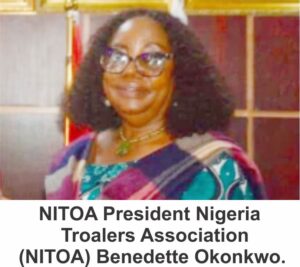 The Nigerian Trawlers Owners Association on its own, called for urgent investment in modern fishing vessels, affordable financing, fish terminals, cold-chain facilities and maritime security to revive Nigeria’s industrial fishing sector and reduce dependence on imported fish.
Speaking on the theme, “Revitalising Nigeria’s Industrial Fishing Sector for Food Security and Economic Growth,” NITOA President Benedette Okonkwo, represented by Anthony Agwaazor, said a stronger industrial fishing sector was essential to food security, job creation, economic diversification and the growth of Nigeria’s blue economy.
She identified high fuel and operating costs, ageing vessels, limited access to finance, inadequate fishing and cold-chain infrastructure, regulatory challenges, maritime insecurity, poor fisheries data, climate pressures and limited processing capacity as major obstacles.
She called for the integration of industrial fishing into Nigeria’s wider blue-economy strategy through public-private partnerships capable of mobilising capital and expertise for fleet modernisation, infrastructure, processing, logistics and market development.
NITOA also highlighted the need to develop skills in marine engineering, fisheries science, vessel management, fish processing and digital fisheries monitoring.
The association supported the use of Turtle Excluder Devices in fishing operations, saying their proper installation and inspection would allow sea turtles and other non-target species to escape fishing nets.
Effective inspection of the devices, it added, would strengthen regulatory compliance, protect marine ecosystems and preserve Nigeria’s fishery resources.
Okonkwo said reviving industrial fishing should not be reduced to increasing the number of vessels.
She explained that sustainable growth required a coordinated combination of modern equipment, affordable finance, infrastructure, research, digital monitoring, maritime security, skilled personnel and value addition.
A coordinated revival, she said, would increase domestic fish production, improve food security, create jobs in coastal communities, reduce imports, generate government revenue and strengthen Nigeria’s contribution to the blue economy.
Science Key to Unlocking Nigeria’s Fisheries Wealth, Says IOI-Nigeria Director
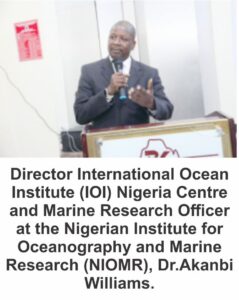 Nigeria must place marine science at the centre of fisheries management and investment if it is to unlock the economic potential of its waters, strengthen domestic fish production and build a sustainable blue economy, Director, International Ocean Institute (IOI) Nigeria Centre and Marine Research Officer at the Nigerian Institute for Oceanography and Marine Research (NIOMR), Akanbi Williams, has said.
Williams maintained that the country’s extensive marine resources has not translated into adequate domestic fish production, with local output currently meeting less than 40 per cent of national fish demand.
Speaking on a topic titled “Marine Science and Sustainable Fisheries Development in Nigeria: Bridging Research, Policy and Practice,” Williams stressed the need to move scientific knowledge beyond research institutions and into fisheries management, investment decisions and fishing practices.
” Nigeria has an 853-kilometre Atlantic coastline across four coastal geomorphic zones and an Exclusive Economic Zone (EEZ) covering about 210,900 square kilometres. The country also gained an additional 16,300 square kilometres of seabed following a 2023 ruling by the United Nations Commission on the Limits of the Continental shelf.
According to Williams, the size of Nigeria’s marine space makes scientific understanding critical to determining how its fisheries resources can be exploited without undermining the ecosystems and communities that depend on them.
He said marine science provides the evidence required to understand fish stocks, biodiversity, oceanography, fishing technology, coastal processes and the livelihoods of fishing communities, but stressed that data collection alone would not deliver sustainable fisheries.
The real value of research, he argued, lies in translating scientific information into management decisions, responsible investment, improved fishing practices and community action.
He cited the management of Nigeria’s inshore fishing zone as an example of how scientific information can be applied to fisheries management, while also identifying bycatch as an area where research can produce practical innovations that improve fishing practices and reduce undesirable catches.
He also warned that climate change and marine ecosystem degradation were changing the conditions under which fisheries operate, making it necessary for management decisions to respond to changing marine environments and the health of the ecosystems that sustain fish stocks.
Williams further identified illegal, unreported and unregulated (IUU) fishing as a major enforcement challenge, noting that weak control of fishing activities can undermine both resource management and the effectiveness of scientific assessments.
Ezisi Urges Policy Focus on Freight Forwarders’ Role in Sustainable Fishing
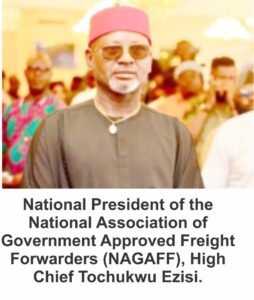 Delivering a keynote address at the occasion, the National President of the National Association of Government Approved Freight Forwarders (NAGAFF), High Chief Tochukwu Ezisi, called for greater policy attention to the role of freight forwarders in Nigeria’s sustainable fishing industry.
Ezisi, a Patron of MARCON, who was represented at the event by the Secretary General of NAGAFF, Godfrey Nwosu, noted that efficient logistics and transparent supply chains are essential to ensuring that sustainably harvested fish reach markets safely, affordably, and in compliance with international standards.
The renowned freight forwarder urged stakeholders to recognise freight forwarders as more than facilitators of trade, describing them as partners in safeguarding food security and supporting coastal livelihoods.
“Their impact on the fishing industry deserves our attention and deliberate integration into policy and practice,” he said.
The NAGAFF President stated that fishing goes beyond being an industry, as it provides food, employment, and livelihoods for people, particularly in coastal communities.
He stressed the need for sustainability, warning that the depletion of Nigeria’s waters would deny future generations the opportunity to survive and prosper.
Ezisi described the conference as a call to balance growth with responsibility, protect livelihoods, secure food for millions, and ensure that Nigeria’s maritime resources remain a blessing rather than a burden.
He commended MARCON for bringing stakeholders together and expressed confidence that the conference would help forge solutions capable of making sustainable fishing a pillar of Nigeria’s prosperity.
Nnadi Calls for Policy Framework to Unlock Nigeria’s ₦25tn Fish Economy
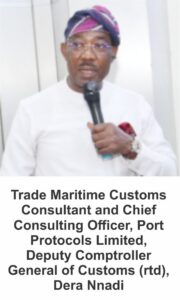 While delivering a good will message at event, a Trade Maritime Customs Consultant and Chief Consulting Officer, Port Protocols Limited, Deputy Comptroller General of Customs (rtd), Dera Nnadi called for the development of a clear and practical policy framework to unlock Nigeria’s estimated ₦25 trillion fish economy.
He described fish as a sustainable staple for Nigerians, noting that beyond its importance as a source of food and nutrition, some fish species also have significant ornamental value.
The retired Customs officer noted that Nigeria is blessed with abundant resources of both consumable and ornamental fish, presenting enormous opportunities for economic development, employment, and wealth creation.
“Nigeria’s fish economy is estimated at about ₦25 trillion,” Nnadi said, adding that the figure was approximately seven and a half times the entire 2025 budget of Lagos State.
Nnadi also called for a strong communique that would capture the collective wisdom of participants and provide a roadmap for government, investors, producers, traders, and other stakeholders.
“The opportunity before us is enormous. What we need now is the awareness, policy commitment, investment, and coordinated action to unlock it,” he added.
Lagos Unveils Strategy to Build Sustainable Fisheries Value Chain
 In a presentation on the occasion, the Lagos State Government unveiled an eight-point strategic framework aimed at building a sustainable fisheries value chain, strengthening food security and improving the livelihoods of coastal communities across the state.
The Lagos State Commissioner for Agriculture and Food Systems, Ms. Ruth Abisola Olusanya, while making the presentation titled “Building a Sustainable Fisheries Value Chain for Food Security and Coastal Livelihoods in Lagos State”,
described Lagos as a major maritime fisheries hub, with an extensive network of marine, lagoon, riverine and estuarine waters supporting artisanal fishers and aquaculture operators.
According to her, fisheries development in Lagos cannot be treated in isolation because fishermen, passenger boats, commercial vessels and security agencies operate within the same waterways.
She stressed the need to balance increased fisheries production with aquatic environmental protection and maritime safety.
The Commissioner identified the fisheries value chain as covering resource production, post-harvest handling and markets, beginning with aquatic ecosystem stewardship, responsible fishing and stock conservation, through artisanal fishing and modern aquaculture to landing, storage, transportation, branding and consumer delivery.