

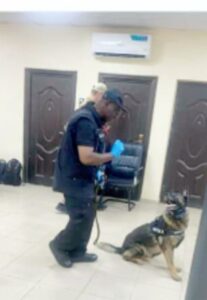
11 Personnel, 2 Vet Doctors, 8 Handlers Drill At MMIA, APM Terminal Apapa, NAHCO Shed Under German BKA Experts Roscher & Shüler
By: The Unique Model Magazine Crime Desk | Lagos
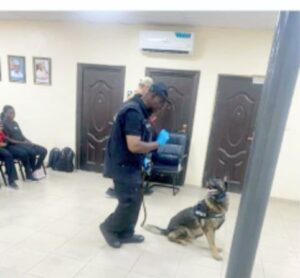 In a renewed onslaught against drug barons who hide cocaine, heroin and cannabis in cleverly concealed compartments, the National Drug Law Enforcement Agency (NDLEA) has moved to sharpen the teeth and noses of its most potent assets — the sniffer dogs.
The Agency has just concluded a specialized refresher training course for its Canine Unit dog handlers, facilitated by two German technical dog handling experts, aimed at sharpening the operational skills of handlers and their service dogs in narcotics detection.
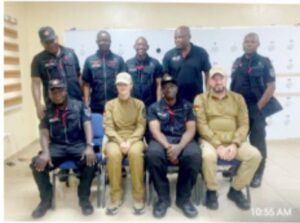
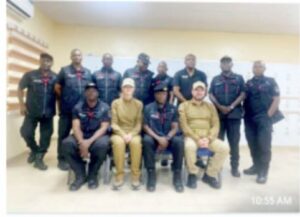 The strategic training, which held at the NDLEA Canine Unit Facility in Lagos, was organized in collaboration with the German Bundeskriminalamt (BKA) and conducted by top technical dog handlers: Mr. Andreas Roscher and Ms. Jacqueline Shüler, who brought international best practices to bear on the training of Nigerian handlers.
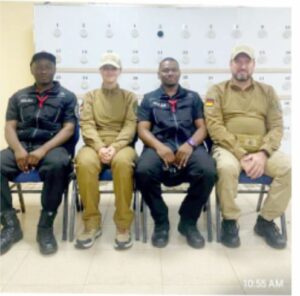 According to details released by the Agency, eleven (11) personnel of the Canine Unit participated in the course. The figure breaks down to the Unit Commander, two (2) veterinary doctors and eight (8) dog handlers alongside their service dogs. In addition, five (5) other officers from Commands within Lagos who have indicated interest in joining the Canine Unit also joined the exercise.
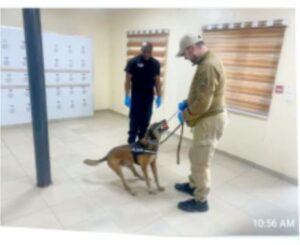
The training curriculum was intensive and operationally tailored to real-life scenarios. It covered advanced obedience and control, narcotics detection techniques including scent imprinting and search patterns, real-life simulation exercises at the Murtala Muhammed International Airport (MMIA) baggage hall, APM Terminals Apapa, MMIA NAHCO export shed, and handler safety and tactics for deployment of canine assets in high-risk areas.
 Speaking on the training, the Chairman/Chief Executive Officer of NDLEA, Brig. Gen. Mohamed Buba Marwa (Rtd), described the exercise as another demonstration of the Agency’s commitment to building a highly skilled and professional workforce capable of matching the sophistication of modern drug trafficking networks.
His words: “Our canine teams remain one of the most potent assets in our detection and interdiction efforts, and this is why we will continue to invest in their retraining and welfare. The successes we have recorded at our airports, seaports and border points in intercepting concealed narcotics are in no small measure due to the dedication and sharpened instincts of our dogs and their handlers. This partnership with our German counterparts further strengthens that capacity and aligns our operations with global best practices”
Marwa further disclosed that the Agency has taken note of the manpower and logistics challenges facing the Canine Unit, including the need for more service dogs, more personnel and boarding facilities to adequately cover the country’s seaports, international airports and land borders, and that plans are underway to address these gaps in line with the recommendation that the refresher training be sustained as an annual exercise.
 Conclusively, from the baggage halls of MMIA to the massive containers at APM Terminals Apapa and the export shed of NAHCO, one message is now clear to drug cartels: there is nowhere to hide. With 11 trained personnel, 2 veterinary doctors ensuring the dogs are in top health, 8 handlers with sharpened skills, and German experts Roscher and Shüler transferring global best practices, NDLEA has again raised the bar.
Indeed, as Marwa puts it, these dogs are more than animals — they are officers with four legs and a super nose, and with this German-backed training, the days of concealed drugs passing through Nigeria’s gateways are numbered.