

RAYMOND TEDUNJAYE, Lagos.
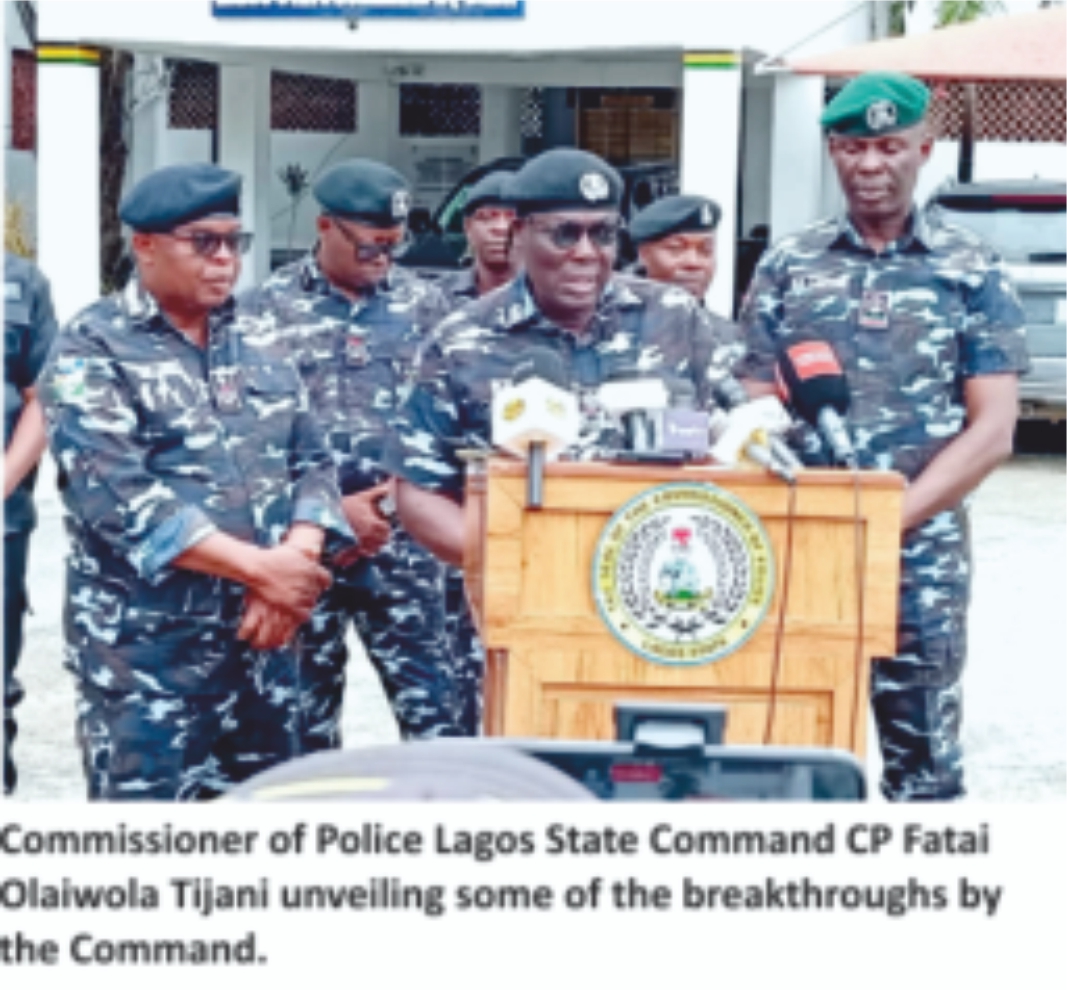
 Barely months after assuming office as the 42nd Commissioner of Police in Lagos State, CP Tijani Olaiwola Fatai has placed intelligence-led policing, rapid response and aggressive clearance operations at the centre of the Lagos State Police Command’s campaign against criminality.
 Since taking over on March 26, 2026, Fatai’s tenure has been marked by a succession of arrests, weapons recoveries, disruption of cult networks and robbery syndicates, as well as operations aimed at preventing criminal attacks before they occur.
The approach appears to be built around a simple security philosophy: identify threats early, strike criminal hideouts decisively and deny offenders the opportunity to establish safe havens.
 243 suspects arrested in first three months.
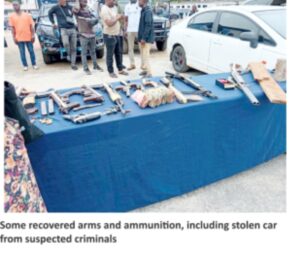
One of the clearest indicators of the command’s early performance came in June, when Fatai disclosed that 243 suspects had been arrested between March and June for offences including armed robbery, cultism, murder and traffic robbery.
The breakdown was significant: 71 suspected armed robbers, 133 suspected cultists, 35 murder suspects and four suspected traffic robbers were apprehended during the period. The command also reported the recovery of 60 firearms.
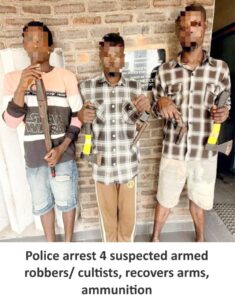 The figures represented the command’s scorecard barely three months into Fatai’s tenure and provided an early glimpse of the scale of the offensive against violent crime.
Breaking The Cultism Network
Perhaps one of the most prominent breakthroughs under Fatai came in the police operation against planned cult violence surrounding the annual July 7 cult-related activities.
Acting on intelligence indicating that rival cult groups were mobilising for attacks, the command deployed Area Commanders, Divisional Police Officers, tactical teams and the Violent Crime Response Unit in coordinated raids across identified criminal hideouts and black spots.
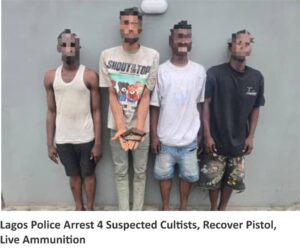
 The operation resulted in the arrest of 135 suspected cultists and the recovery of 26 firearms, alongside dangerous weapons, cult paraphernalia, suspected illicit drugs and other exhibits.
The significance of the operation was not merely the number of arrests. By acting on intelligence before the anticipated violence could erupt, the police sought to prevent bloodshed rather than simply respond after attacks had occurred.
Operation KO S’AYE: Taking the fight to criminal hideouts
Fatai’s command has also intensified the use of coordinated raids under Operation KO S’AYE, designed to dismantle criminal hideouts and deny hoodlums safe operating spaces.
 On July 5, police operations around the Boolar, Okofilling Bus Stop, Igando and other black spots in the Area M, Idimu axis reportedly resulted in the arrest of about 153 suspects and the seizure of 100 unregistered motorcycles.
A fresh operation on July 19 produced another major haul. Police arrested 147 suspects during raids on criminal hideouts around Boolar, Super Ile-Epo and other identified black spots.
Recovered items included 250 expended cartridges, 22 machetes, five battle axes, knives, charms and substances suspected to be Indian hemp.
The successive operations underscore the command’s strategy of combining intelligence gathering with large-scale tactical deployments.
Kidnap Attempt Foiled, Weapons Recovered
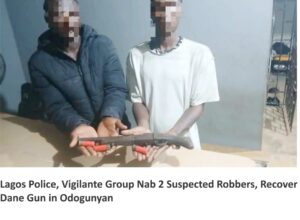 The command also recorded a significant breakthrough in May when its operatives foiled an alleged kidnapping operation and neutralised four suspected kidnappers.
The operation produced the recovery of three AK-47 rifles, two submachine guns, a double-barrel pump-action firearm, locally fabricated pistols, magazines and 42 rounds of live ammunition, among other exhibits.
Beyond the immediate arrests, the recovery of firearms was important in disrupting the capacity of suspected criminal groups to carry out further violent operations.
Cracking Robbery And ‘One Chance’ Syndicates
 The Fatai-led command has also targeted robbery networks, including the notorious “One Chance” syndicates that prey on commuters.
In June, police announced the arrest of a suspect allegedly linked to a One Chance robbery syndicate. Investigators recovered 51 mobile phones suspected to be proceeds of previous criminal operations and were pursuing other members of the network.
The command also reported that it had foiled 28 armed robbery operations during the March-June period and arrested 71 suspected armed robbers.
Intercepting Weapons, Military- camouflaged And Illicit Substances
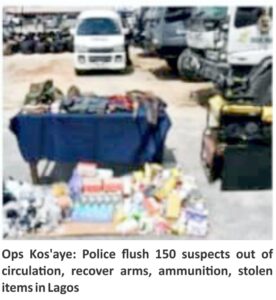
Another notable breakthrough came in June when police intercepted a MAN diesel truck allegedly conveying 47 sacks of military camouflage uniforms and 80 cartons of substances suspected to be illicit drugs.
Fourteen firearms and four live cartridges were among other items recovered in the command’s June operations, alongside suspected stolen property, communication devices and vandalised electrical cables.
The interception demonstrated the broader scope of the command’s operations, extending beyond conventional street crime to the movement of potentially dangerous materials and organised criminal networks.
Vehicle Fraud Syndicate Uncovered
 Fatai’s crime-busting drive has not been restricted to violent crime.
In July, the command announced the uncovering of a suspected vehicle fraud syndicate allegedly involved in obtaining exotic vehicles worth more than N1 billion through deception, dud cheques and false representations.
Investigators reportedly discovered links among three cases that had initially been reported separately, leading to a harmonised investigation into alleged conspiracy, obtaining goods under false pretence, fraudulent conversion, stealing and issuance of dud cheques.
The case highlighted the command’s increasing use of investigative coordination to identify connections between seemingly unrelated crimes.
Strengthening The Operational Architecture
 Fatai’s tenure has also witnessed efforts to strengthen the operational capacity of the command. In July, he commissioned a renovated base for the Violent Crime Response Unit (VCRU) at Ijora and witnessed the presentation of five additional operational vehicles, 1,200 raincoats and 1,000 pairs of operational boots to the command through the Lagos State Security Trust Fund.
The VCRU has become an important component of the command’s tactical response to violent crime, particularly in intelligence-driven raids and operations against suspected criminal networks.
Beyond Arrests: Community Partnership
While the arrest figures have dominated headlines, Fatai’s security strategy has also placed emphasis on community cooperation and engagement.
Police representatives have participated in youth-police engagement programmes aimed at strengthening relationships between law enforcement and young people, with particular emphasis on rejecting cultism, cybercrime, drug abuse and other forms of criminality.
The command has repeatedly urged residents to provide timely and credible information to enable police to identify criminal hideouts, apprehend offenders and prevent attacks.
A Rapidly Evolving Scorecard
 Fatai assumed command of one of Nigeria’s most complex policing environments, where population density, commercial activity, cultism, street robbery, organised crime and traffic-related vulnerabilities create a demanding security landscape.
His early months have therefore been defined less by a single spectacular operation than by a pattern of intelligence-led interventions: hundreds of arrests, firearms seizures, cult raids, robbery prevention, disruption of alleged kidnapping operations, interception of suspected criminal consignments and the dismantling of hideouts.
From the 243 arrests recorded between March and June, to the 135 suspected cultists apprehended ahead of the July 7 activities, and the 147 suspects arrested in the July 19 Operation KO S’AYE raid, the emerging picture is that of a command increasingly focused on taking the fight to suspected criminals rather than waiting for crimes to occur.
For Fatai, however, the ultimate measure of success will extend beyond arrest statistics. Sustaining reductions in violent crime, ensuring that suspects are properly investigated and prosecuted, recovering more illegal weapons, protecting critical infrastructure and maintaining public confidence will determine whether the early operational gains translate into a lasting security legacy.
For now, the Lagos CP has established a clear operational signature: intelligence first, rapid response, aggressive disruption and no safe haven for criminal elements.